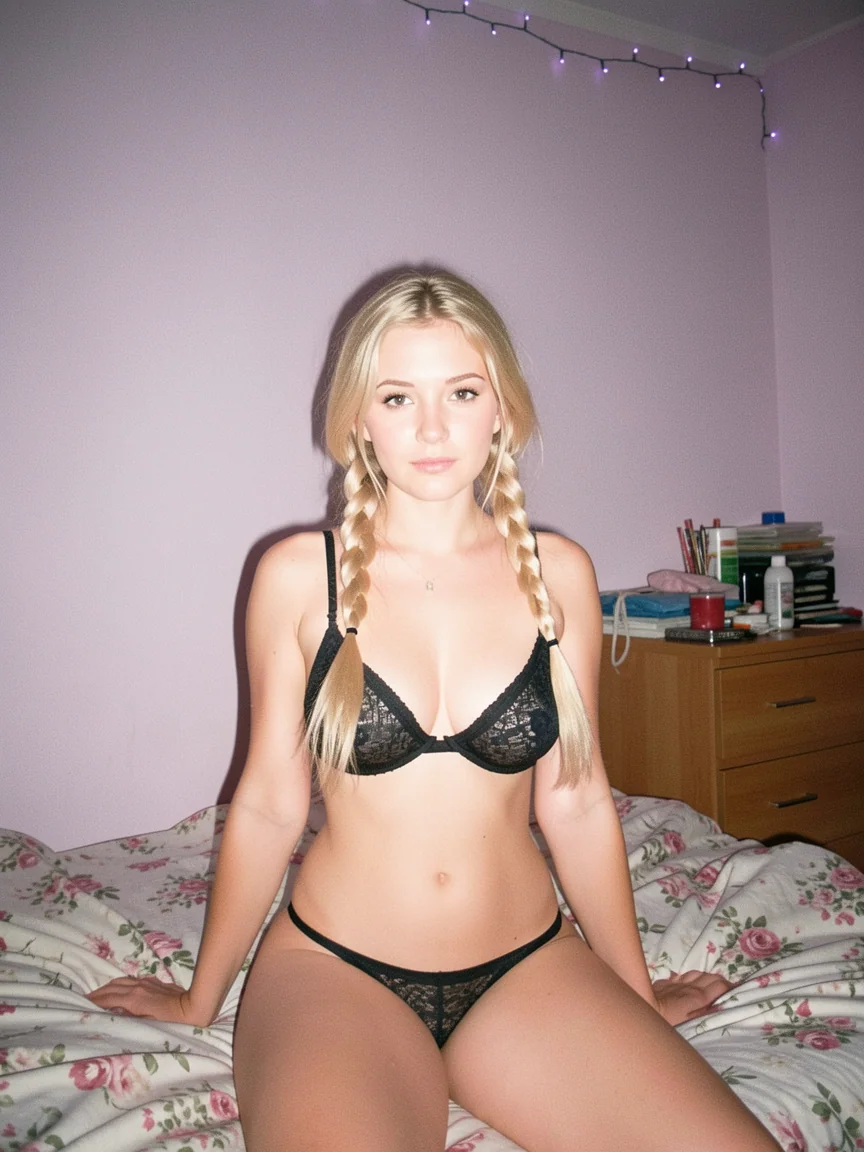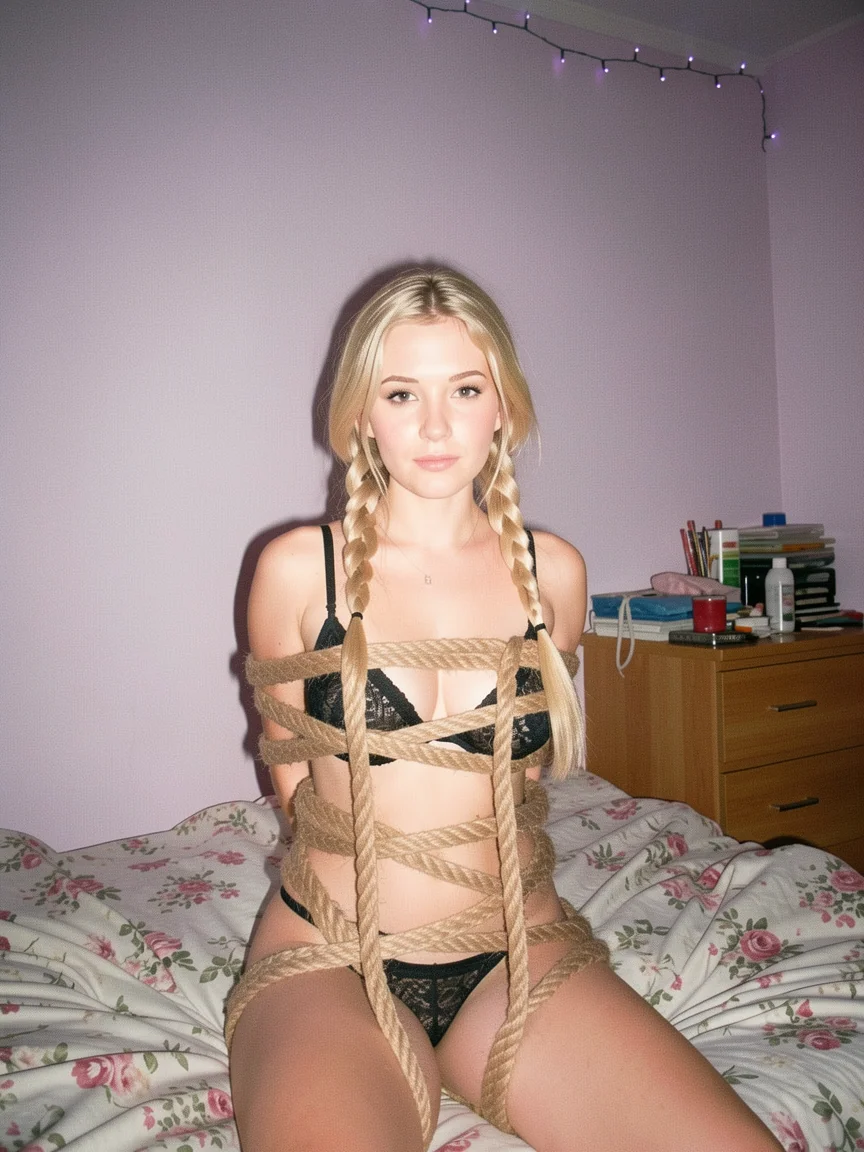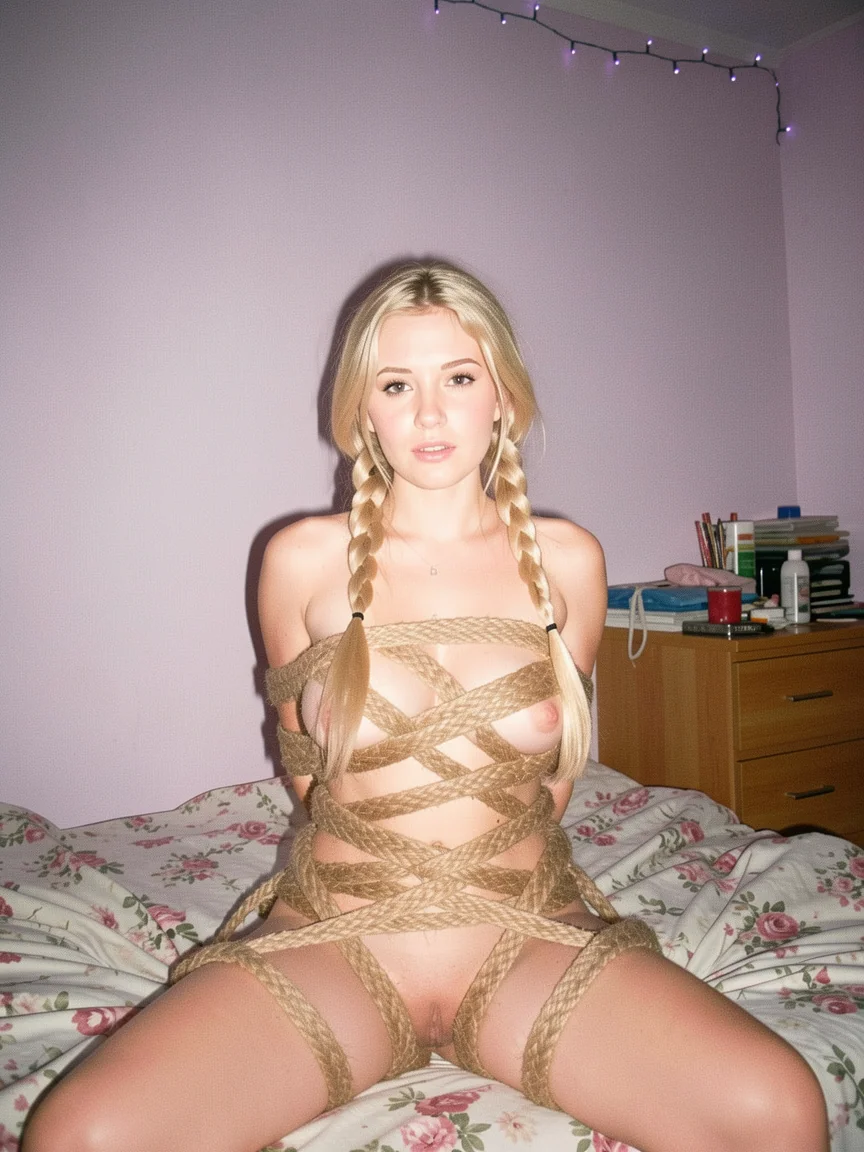
The process at a glance.
- Identify the visible highlights and shadows.
- Set camera distance and pose intent.
- Add only the material and palette details that matter.
- Inspect composition before creating a variation.
Read the light that is visible
Look at brightness across the face and body, then the shadows against the pale wall and bedding. Describe the direction and contrast you can observe. The image does not show enough to identify a particular lamp or window as the source.
Check how materials respond
Reflective gold-toned styling catches brighter highlights than skin or fabric. The patterned bedding adds visual texture. Judge these separately when deciding whether a lighting change still looks coherent.
Keep the composition steady
Use the centered seated pose, camera viewpoint, and bedroom layout as anchors while trying one lighting change. Compare the whole image, including skin tone, reflections, and shadow depth, before continuing.
Before you keep the result.
- Clearly adult fictional setting
- No coercion or exploitation
- Light direction is explicit
- Pose and anatomy reviewed
A few questions.
How do I describe a light source I cannot see?
Describe the visible effect: light direction, softness, highlights, and shadow depth. Do not assume which fixture produced it.
Can I create variations?
Yes; branch one lighting or atmosphere change at a time from the strongest permitted parent.